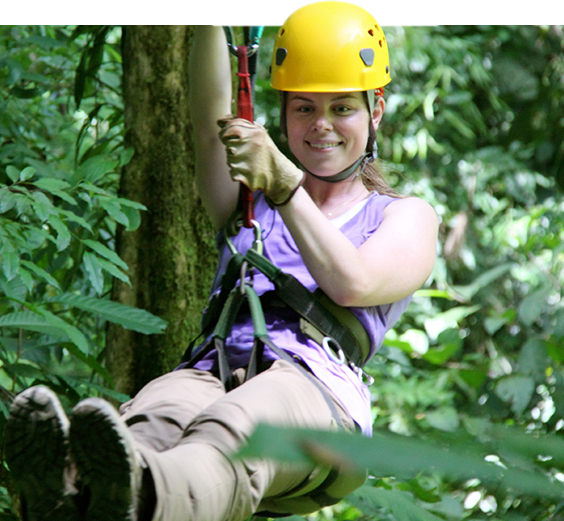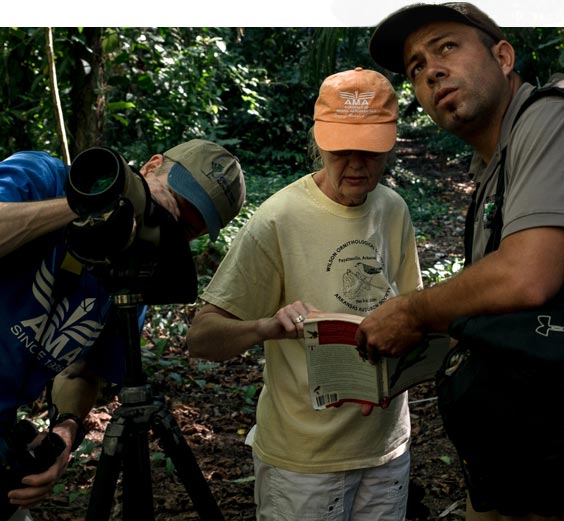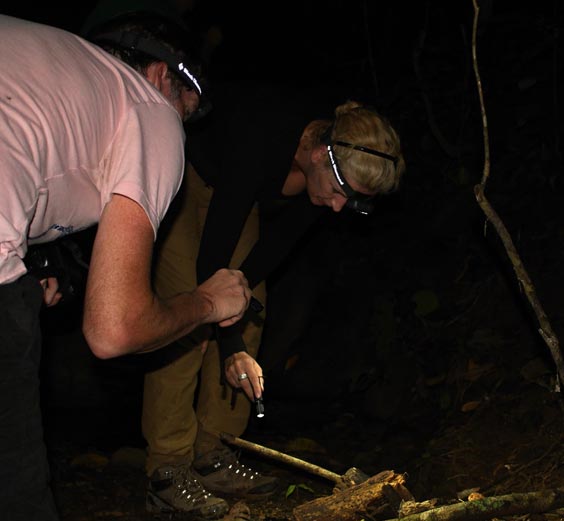
At Hacienda Barú we believe that top guides are blessed with a combination of practical experience, technical knowledge and a special feeling of intimacy with the rainforest. They love the jungle and love telling people about it.
One hundred years ago what is now Hacienda Barú was all primary rainforest. Nobody lived here. By the mid 1940s a few people had colonized the area and were cutting down the jungle and convirting it into cattle pasture and rice fields. The mid 1980s marked the end of the era of deforestation and the beginning of the transformation back into natural habitat. In 1987 Hacienda Barú began offering guided tours of the rainforest. Our first guides were people who had previously worked with cattle and farming, and had even been participants in the deforestation of the area. They hadn't done this because they disliked the rainforest or had any particular desire to destroy it, rather it was simply because ranching and farming was the best way to earn a living at the time. With the advent of ecological tourism these campesinos began learning a new way of putting food on the table.
Campesinos are rural Costa Rican people. Though most have a humble education, they invariably possess a vast knowledge about the rainforest, acquired entirely from personal experience. At Hacienda Barú we have found that most campesinos feel a very strong connection to the rainforest and involvement with it. This feeling intensifies once they learn that it is the habitat with the highest density of living species on the planet. Once local people realized that right here, in their own back yard, was a treasure that the whole world wanted to know about, it made them proud. Now they love telling others what a special place it is and why. The explanation often takes the form of stories about rainforest species and how they interact with each other. Some of these stories come from first-hand experience and some from the experiences of family and friends.
In recent years several young people who grew up in a city have joined our guiding staff. These have all come to us a interns who needed a certain level of practical experience in order to graduate from college or high school. These young people learned from the campesinos on our staff and visa versa. And, they all acquired a deep appreciación for the rainforest and the multitude of life forms it supports.
All of our guides at Hacienda Barú, whether they be campesinos or college graduates, have that special feeling of connection with the rainforest, and they have a burning desire pass on their knowledge to others. We encourage them to spend as much time as possible in the jungle because that is where they acquire the knowledge that makes them better guides. Many will go birding or just take a hike when on their own time, or sometimes they will refer to a biology text to learn more about the species they see every day or something they have recently discovered. At least once a year we bring a master guide from somewhere else in Costa Rica, a person with vast experience who gives a guide training seminar to help sharpen their skills.
This combination of practical experience supplemented with technical knowledge plus that special connection to the rainforest has been the magic formula that has produced the guiding staff we have today. We think our guides are pretty special, but in the end our guests are the ones who have to decide.
- Por Jack Ewing
El momento que vi los dos gatitos negros entró a mi mente una frase de uno de las novelas del reconocido escritor Robert Heinlein . Hace tantos años que lo leí que no recuerdo el nombre de la novela, pero si recuerdo la frase. En referencia a un tema complejo, dijo que tratar de entenderlo es como “...ir a media noche en una noche sin luna a buscar en un sótano obscuro un gato negro que no está ahí.” Estos dos gatitos eran completamente negros sin ninguna seña de otro color. Hasta los ojos eran negros. Aparte de su extremo color, siempre habia un aire de misterio alrededor de ellos. No caminaban como gatos normales, sino caminaban agachados como si iban rastreando o como si anduvieran cazando algo constantamente. Aparte de ronronear no hicieron ningún sonido, nunca rascaron los muebles con sus garras, nunca se metieron debajo de los pies de las personas, y no se metieron en lios de ninguna clase. Siembre tenian un aspecto extraño. Les pusimos los nombres Hocus y Pocus como de los magos.
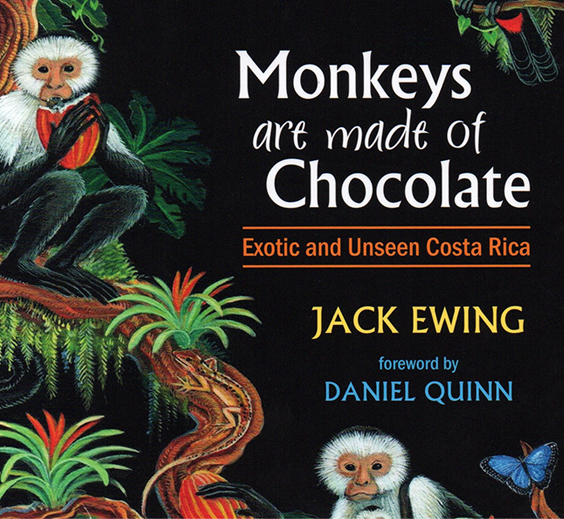
Descubra la manera misteriosa y fascinante en el que los animales y las plantas y las personas interactúan unas con otras en los bosques lluviosos de Costa Rica.
Autor y naturalista Jack Ewing comparte una gran cantidad de observaciones y experiencias, se reunieron más de tres décadas de la vida en el suroeste de Costa Rica, el hogar de algunos de los ecosistemas más prolíficos y variados de la Tierra.
Más que una simple colección de ensayos, los monos son de chocolate es un testimonio de la maravilla de la vida en todas sus formas innumerables, vista a través de los ojos de un hombre con un don de discernimiento sutil y un don natural para contar historias.

The troop of 26 monkeys was strung out over about 100 meters, moving through the forest. The lead monkey, a mature female, came to an area where the tree cover was broken by an open swamp with only a narrow corridor two trees wide going around it.
Nuestra tienda de regalos es bien conocida en la zona por tener una gran variedad de regalos. No sólo va a encontrar camisetas, hamacas y joyería. Nuestra política es comprar (en lo posible) de los artesanos locales que trabajan con materiales locales de un recurso sostenible.
Leer más