“Hey, look at this!” I looked up from the advertisment. “There is an ‘Ecological Rent-a-Car” in San Jose. Their cars must be hybrids or run on fuel cells or maybe butane. Isn’t that great?”
My daughter’s tolerant smirk, told me I was way off base. “Oh Daddy, you’re so naive. ‘Ecological’ is a popular word. It attracts customers.”
No to be daunted, I dialed the number and asked the question: “Why are your rental vehicles more ecological than the others.” The line went dead. Later, a friend called and actually got a curt answer: “It is only a name. So, what’s the big deal?”
That was 1993 and my daughter was right. “Ecology” had become a magic word in Costa Rica, and it did attract business. The terms “ecology” and “ecological tourism” eventually became so overused, misused and abused that we, at Hacienda Barú National Wildlife Refuge quit using them in our publicity.
My diccionary defines “ecology” as: “The system of relationships between organisms and their environments.”
Several “ecological tourism” organizations have their own definitions for the term, all of which have certain points in common. A business that claims to do Ecological Tourism in the true sense of the word must:
Conserve Nature-- Participate actively in the protection and restoration of flora and fauna and contribute to environmental causes.
Conserve Cultural Values-- Support local culture and community development, without trying to mold them to its own needs.
Improve the Local Economy-- Hire, buy and reinvest locally. Not import all of the furniture and fixtures, hire a staff from somewhere else and export the profits.
Have Minimum Environmental Impact-- Have facilities and practices that minimize damage to ecosystems. You can’t bulldoze a road through a rainforest, level off a forested hill top with a spectacular ocean view, build a concrete monster and call your business ecological tourism.
Educate Visitors about Ecology-- Put clients in contact with nature and help them to understand relationships between organisms and their environment.
Shortly after my disillusionment over Ecological Rent-a-Car, I was driving through a tourist area near a well known National Park when a sign caught my eye, and then caused me to jerk my head around. It read “Ecological Casino.” Being the sucker that I am, I had to ask. The answer. “The walls are many shades of green, with a rainforest scene of leaves and trees, birds and monkeys.”
The magic of “Ecological” soon wore off, and we at Hacienda Barú, got over our phobia and you may again see the term “ecological tourism” in our ads.
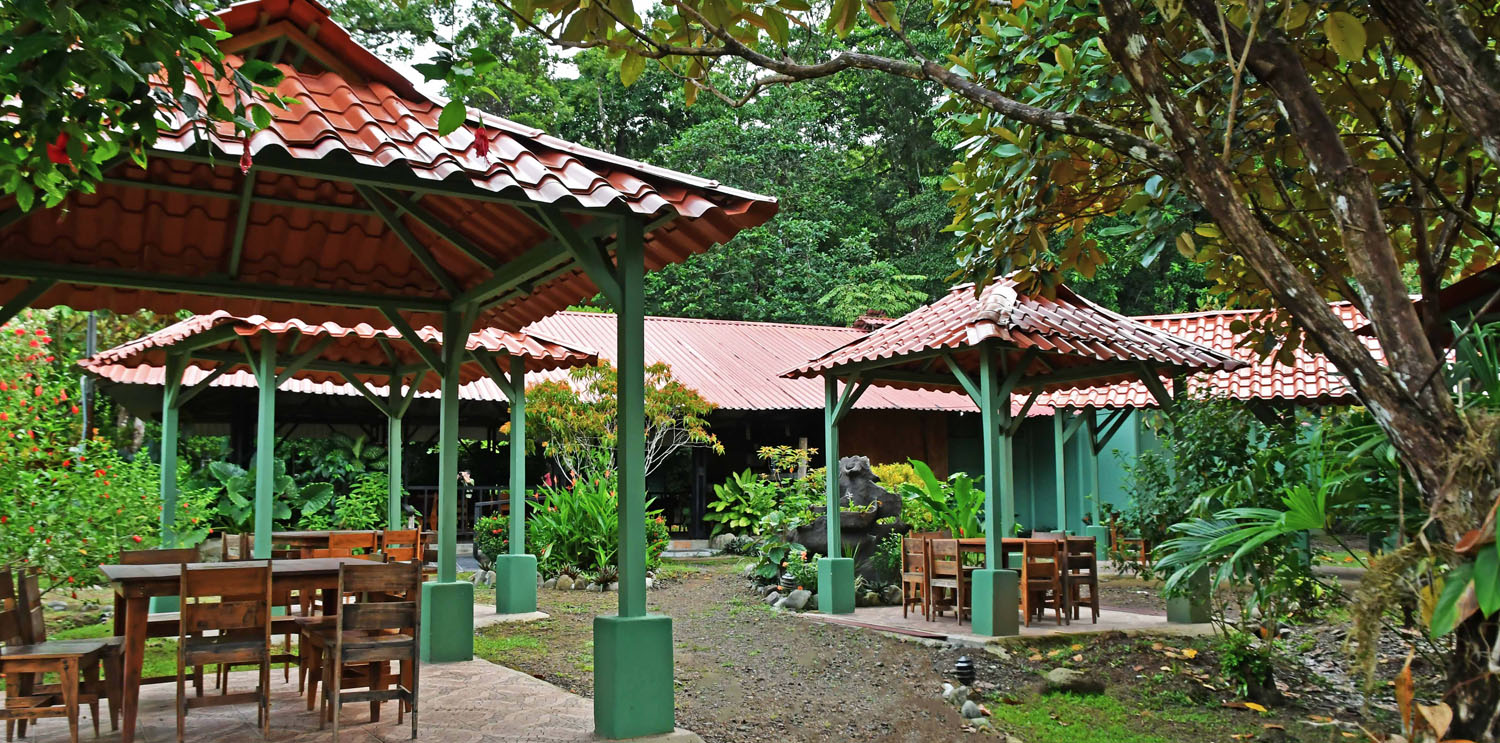
If you are looking for true ecological tourism, the guidelines listed above may be helpful. As you can see, there is a lot more involved than simply painting the walls green.
- by Jack Ewing
The Merriam-Webster online dictionary defines the word “sustainable” as: “of, relating to, or being a method of harvesting or using a resource so that the resource is not depleted or seriously damaged.”
The word has been in use for a long time, at least since 1727 according to Merriam-Webster. In recent years, with increased interest in our environment and concern over the rate of depletion of our natural resources, the word has come into popular usage. Information about how to live sustainably is readily available, as are products for sustainable ways of doing things. Energy efficiency is of utmost importance followed by water efficiency, social responsibility, general environmental friendliness and others.
This Black Iguana (Ctenosaura similis) likes to sun himself at the entrance to Hacienda Barú Lodge.
We call him “The Boss” because of his attitude of superiority.
Our Gift Shop is well known in the area for having a wide variety of gifts. Not only will you find T-Shirts, Hammocks and Jewelry, but also a beautiful selection of Costa Rican made Arts and Crafts. Our policy is to buy (as much as possible) from local artisans who work with local materials of a sustainable resource.