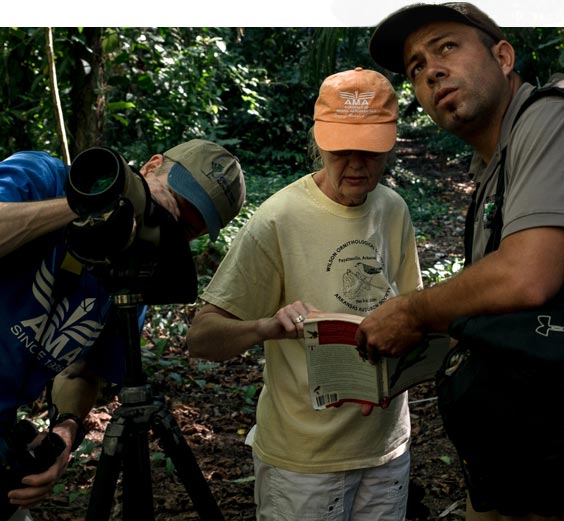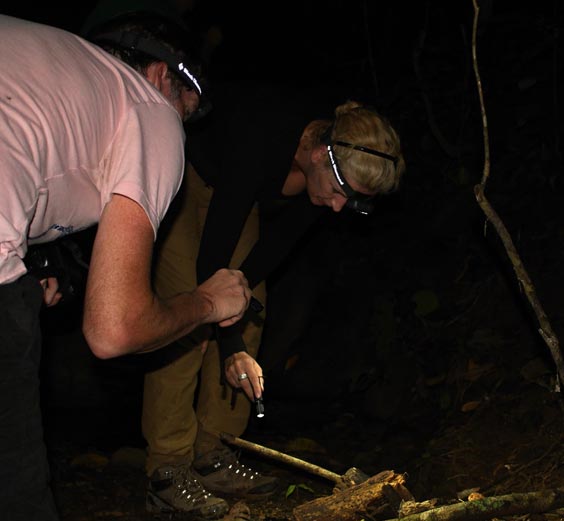
Ever since 1984 when the first graduate student in herpetology from the Universidad de Costa Rica came to Hacienda Barú to do his masters thesis on the Olive Ridley Turtle, the refuge has collaborated with scientific investigators. In addition to the marine turtle study, biologists from Costa Rica, United States, Germany and Canada have carried out research on monkeys, pacas (a 15 lb. nocturnal rodent), butterflies, frogs, bats, and a plant which contains six known anti-carcinogenic agents in its roots. The Hacienda Barú National Wildlife Refuge has collaborated with these scientists by providing them with room and board, office services, local guides, and the use of the refuge to carry out their projects. These services have been provided at very reduced costs to the researchers.
Due to lack of resources the Costa Rican National Museum has done very little archeaological research in the area around Hacienda Barú. On two occasions investigators have visited the zone for a quick overview of the evidence that might be found for study when financing for more advanced investigation is available. On both of these excursions the archeologists stayed at Hacienda Barú. They found many indications that large indigenous populations had been present on the hacienda and in surrounding areas. The evidence includes pieces of ceramics, various artefacts, petroglyphs, grave sites and probable village sites. Hacienda Barú has a cordial relationship with the museum and will definately colaborate in any future archeological study of the area.
The year 1982 was when Hacienda Barú made and maintained its first nursery for marine turtle eggs. Employees, neighbors, volunteers and guests have all helped in the collection of the eggs which have been incubated in the nursery. The police officers and MINAE guards, have also donated eggs they have confiscated from poachers. The activity has always been carried out with the assistance and approval of the Environmental Ministry. Records of the eggs incubated and turtles liberated have been kept over the years and turned over to interested institutions such as the University, the Environmental Ministry and the Fisheries Department at the end of each season. More than 80,000 turtles have been released the first of which are now returning to lay their eggs. ASANA has been a great help with this project which they use in their environmental education program. Primary school students come to Hacienda Barú and assist in the liberation of the baby turtles and receive a talk on the conservation of this species.
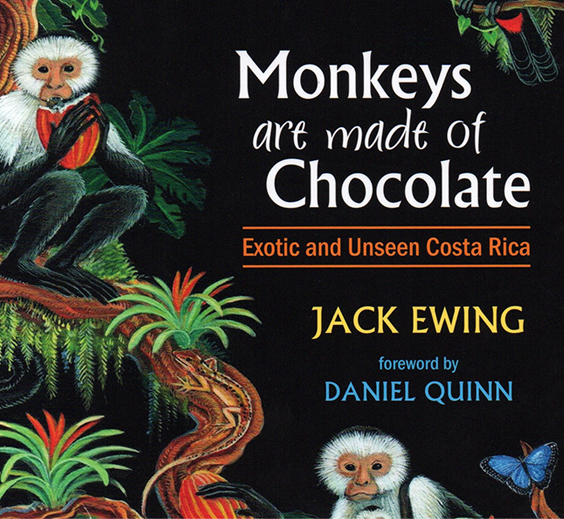
- by Jack Ewing
The Merriam-Webster online dictionary defines the word “sustainable” as: “of, relating to, or being a method of harvesting or using a resource so that the resource is not depleted or seriously damaged.”
The word has been in use for a long time, at least since 1727 according to Merriam-Webster. In recent years, with increased interest in our environment and concern over the rate of depletion of our natural resources, the word has come into popular usage. Information about how to live sustainably is readily available, as are products for sustainable ways of doing things. Energy efficiency is of utmost importance followed by water efficiency, social responsibility, general environmental friendliness and others.
This Black Iguana (Ctenosaura similis) likes to sun himself at the entrance to Hacienda Barú Lodge.
We call him “The Boss” because of his attitude of superiority.
Our Gift Shop is well known in the area for having a wide variety of gifts. Not only will you find T-Shirts, Hammocks and Jewelry, but also a beautiful selection of Costa Rican made Arts and Crafts. Our policy is to buy (as much as possible) from local artisans who work with local materials of a sustainable resource.